
It's one of the most common questions we get from operators across Sydney: how often do hydraulic hoses actually need to be replaced? The answer isn't a simple number you can put in a calendar, because hydraulic hose lifespan depends on a combination of factors that vary enormously from one machine to the next and one job site to the next.
What is certain is this: waiting for a hose to fail before you replace it is the most expensive and dangerous approach you can take. A burst hydraulic hose on an active site doesn't just cost you the repair. It costs you downtime, potential injury, environmental contamination, and in some situations, your compliance standing.
This guide breaks down everything you need to know about hydraulic hose lifespan in Australia, the signs that replacement is overdue, and how to build a replacement strategy that keeps your equipment running safely and your costs under control.
What Determines How Long a Hydraulic Hose Lasts?
There is no universal lifespan figure that applies to all hydraulic hoses in all situations. The actual service life of any given hose is determined by several interacting factors, and understanding these is the foundation of any sensible replacement programme.
Operating Pressure
Hydraulic systems don't run at a constant, steady pressure. Every time a valve shifts, a cylinder reverses, or a pump cycles, the system generates pressure spikes that can momentarily exceed the normal working pressure by a significant margin. These impulse events repeatedly stress the hose's internal wire reinforcement, and over time, that fatigue accumulates.
A hose operating close to its maximum working pressure with frequent pressure spikes will degrade considerably faster than one running well within its rated capacity. This is why correct hose selection using the STAMPED method matters so much, and why oversizing your pressure rating is always a safer long-term decision.
Temperature
Both the temperature of the hydraulic fluid inside the hose and the ambient temperature around it affect how quickly the hose material breaks down. In Australian conditions, ambient heat is a serious factor. A machine running in a western Sydney industrial estate in January, where ambient temperatures can push past 40°C, is placing significantly more thermal stress on its hoses than the same machine would experience in a cooler environment.
High fluid temperatures accelerate the degradation of the hose's inner tube, while UV exposure and heat attack the outer cover. When both are happening simultaneously, lifespan shortens fast.
Frequency and Intensity of Use
A hose on a machine that runs eight hours a day, five days a week, accumulates wear at a very different rate to one used occasionally. High-cycle applications where hoses are constantly flexing, such as on excavator arms or loader booms, experience fatigue much faster than hoses in relatively static installations.
Environmental Exposure
Abrasion from contact with other components, exposure to chemicals, UV radiation, moisture, and in coastal Sydney locations, salt air and humidity, all accelerate surface and structural degradation. A hose routed without adequate protection through a tight, abrasive area will wear through its outer cover long before its other materials would otherwise fail.
Quality of Installation
A correctly specified hose installed incorrectly will still fail early. Tight bends that exceed the minimum bend radius, twisted routing that places rotational stress on the assembly, and fittings that aren't crimped to specification are all common installation errors that dramatically shorten hose life regardless of the hose's inherent quality.
Average Hydraulic Hose Lifespan: What to Expect in Australian Conditions
With those variables in mind, here is a general guide to what you can expect from hydraulic hoses across different operating environments in Australia:
Heavy-duty and high-pressure applications (excavators, mining equipment, continuous industrial use): 1 to 2 years is a realistic service expectation, sometimes less in extreme conditions
Moderate applications with good maintenance (agricultural machinery, fleet vehicles, light construction): 3 to 5 years is achievable
Low-pressure, low-cycle, well-protected installations: Up to 6 years in some cases, though annual inspection remains important
It's worth noting that even a hose that looks perfectly fine externally can have significant internal wear. The wire reinforcement can fatigue, and the inner tube can degrade without any visible sign on the outer cover. This is precisely why visual inspection alone is not enough, and why age-based replacement schedules matter for high-criticality applications.
ISO 18752 and relevant Australian standards provide guidance on hose qualification and replacement intervals for specific applications. For critical equipment, particularly in mining and construction, following manufacturer-specified replacement intervals is not just best practice, it is often a regulatory and insurance requirement.
Warning Signs That Your Hydraulic Hose Needs Replacing Now
Regardless of age or scheduled replacement intervals, any of the following signs means a hose should be removed from service immediately. Do not wait for the next inspection cycle if you see these.
Regardless of age or scheduled replacement intervals, any of the following signs means a hose should be removed from service immediately. Do not wait for the next inspection cycle if you see these.
1. Visible Cracks or Cuts in the Outer Cover
Cracking in the outer rubber cover, particularly around bends or near fittings, indicates UV degradation, heat damage, or flexing fatigue. Once the cover is compromised, moisture and contaminants can reach the wire reinforcement and accelerate internal deterioration rapidly.
2. Leaks or Fluid Residue Along the Hose
Any sign of fluid weeping along the hose body or pooling near fittings is a clear indicator that the assembly is no longer holding pressure adequately. Even a small leak indicates a failure point that will worsen under continued pressure cycles. Hydraulic fluid injection injuries, where high-pressure fluid penetrates skin, are among the most serious workplace injuries associated with hydraulic systems, and they frequently occur when operators handle hoses believed to be merely "seeping" rather than critically damaged.
3. Blistering or Swelling Along the Hose Body
A blister or soft spot on the outer cover indicates that the inner tube has failed and hydraulic fluid is migrating through the hose wall. This is an advanced failure state and the hose should be considered a serious hazard. Remove it from service immediately.
4. Corrosion on Fittings
Surface rust on fitting bodies is a cosmetic issue, but significant corrosion into the thread form or sealing surfaces is a structural concern. Corroded fittings may not seal properly under pressure or may fail to disengage safely during maintenance. For operators in coastal Sydney locations, fitting corrosion is a particularly common failure mode.
5. Abrasion Exposing Wire Reinforcement
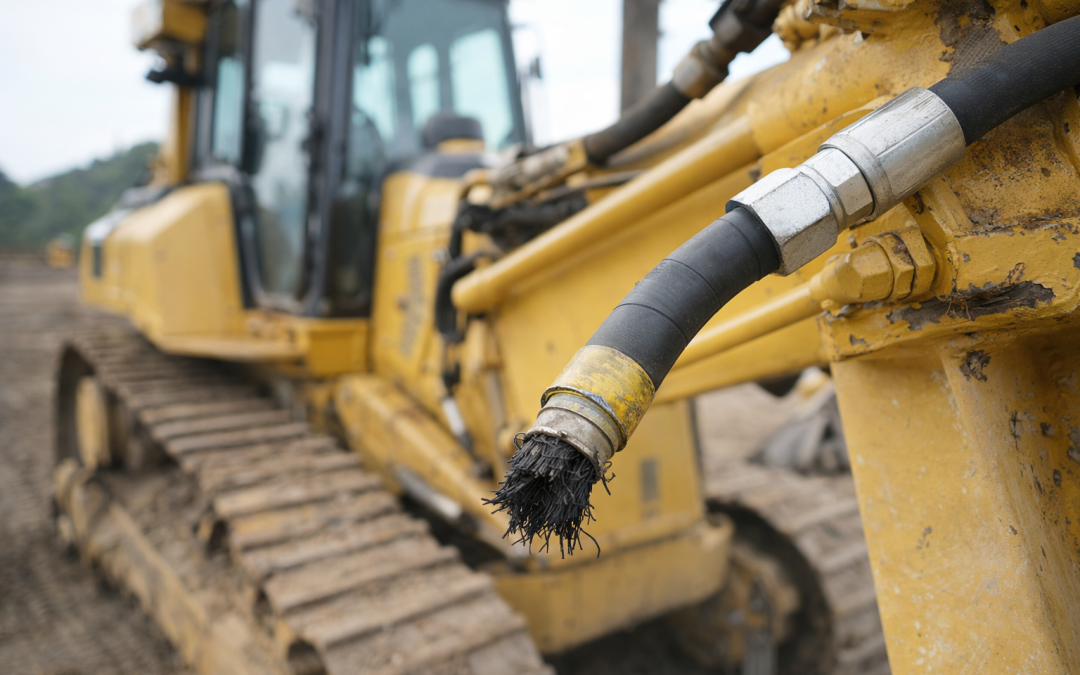
If the outer cover has worn through and the wire braid beneath is visible, that hose is operating without protection. The reinforcement itself is now exposed to moisture, abrasion, and contamination, and once wire strands begin to corrode or break, catastrophic failure can follow with very little warning.
6. Hose Stiffness or Kinking
A hose that has become hard, brittle, or will no longer flex normally has suffered thermal or chemical degradation to its rubber compound. Kinking, whether from improper routing or material breakdown, creates localised stress concentrations that are a common precursor to sudden failure.
Why Timely Replacement Is Always Cheaper Than Reactive Repair
This is not just a theoretical argument. The real-world economics of hydraulic hose failure consistently favour prevention over reaction.
When a hose fails in service, the costs stack up quickly. The immediate repair itself is typically more expensive as an emergency callout than a planned replacement. The equipment is down for the duration of the repair, which on a billable job site or production line translates directly to lost revenue. If the failure causes fluid to escape, there is cleanup cost, and in environmentally sensitive locations, potential regulatory exposure. If an operator is injured, the consequences go well beyond the financial.
A planned replacement programme, by contrast, lets you schedule work during downtime, source hoses at standard pricing, and keep equipment productive during peak periods. Many Sydney construction and mining operations now build replacement schedules around their equipment servicing intervals precisely because the cost comparison makes the case so clearly.
Building a Proactive Hydraulic Hose Replacement Strategy
A proactive strategy doesn't mean replacing hoses that still have service life in them. It means having a system that identifies when replacement is due before failure occurs. Here's how to build one that works in practice.
Maintain a Hose Register
Every hydraulic hose assembly on critical equipment should be logged with its installation date, specification details, operating conditions, and next inspection or replacement date. This doesn't have to be complicated: a simple spreadsheet or maintenance management system record per machine is enough. The key is that someone is responsible for reviewing it and acting on it.
Set Inspection Intervals Based on Operating Conditions
For heavy-use equipment in demanding conditions, monthly visual inspections are a reasonable baseline. For lighter applications in less harsh environments, quarterly may be adequate. The inspection should cover the full length of every hose, including the areas near fittings and any points where the hose contacts other components or structures.
Replace Before Peak Periods, Not After Them
The worst time to have a hose failure is during your busiest period: harvest season, a major construction push, or a peak production run. Scheduling a hose audit and replacing any hoses showing wear before these periods begins is one of the most cost-effective steps any equipment operator can take.
Use Age-Based Replacement for High-Criticality Applications
For hoses in critical applications where a failure creates serious safety or operational risk, consider setting maximum service life limits regardless of visual condition. Many operators in mining and heavy construction use a two-year hard replacement cycle for high-pressure hoses in critical positions, regardless of whether those hoses show visible signs of wear. The cost of the hose is trivial against the cost of the failure.
How to Extend Hydraulic Hose Lifespan
While replacement is inevitable, there are practical steps that maximise the service life you get from each hose assembly.
Route hoses correctly from installation. Avoid tight bends, avoid twisting, and ensure the hose has enough slack to accommodate any movement in the system without being pulled taut. A properly routed hose lasts significantly longer than one fighting its own geometry.
Use protective sleeving in abrasion-prone areas. Anywhere a hose runs near metal edges, other hoses, or moving components, a spiral wrap or abrasion sleeve dramatically extends outer cover life at minimal cost.
Keep operating pressure within rated limits. Running hoses consistently near their maximum working pressure accelerates fatigue. Where possible, use a hose rated above your operating pressure to provide additional service life margin.
Keep hydraulic fluid clean and within operating temperature. Contaminated or overheated fluid accelerates inner tube degradation. Good fluid maintenance extends both hose life and the life of every other hydraulic component in the system.
Secure hoses to prevent unnecessary movement. Hoses that vibrate or move excessively work-harden their fittings and internal reinforcement faster. Proper clipping and support reduces fatigue accumulation.
For guidance on correct hose selection and installation, our hydraulic hose services page covers what we check and recommend across the full range of applications we work with across Sydney.
Frequently Asked Questions
How long do hydraulic hoses last?
Typically between 1 and 5 years, depending on the application, operating pressure, temperature, and maintenance. Heavy-duty or high-pressure applications in harsh Australian conditions should be inspected regularly and replaced at the lower end of that range. Hoses in lower-demand applications with good maintenance can reach 5 years or beyond, but should still be inspected at least annually.
Can hydraulic hoses fail without any visible warning?
Yes. Internal wire reinforcement fatigue and inner tube degradation are not always visible from the outside. A hose can look fine externally and still be on the verge of failure due to internal wear accumulated over time. This is why age-based replacement intervals for critical hoses are important, not just inspection-based approaches.
How often should hydraulic hoses be inspected?
For equipment in heavy or continuous use, monthly visual inspections are a sensible baseline. For lighter applications, quarterly inspections are generally adequate. Inspections should cover the full hose length, fitting integrity, routing, and any signs of abrasion, leaking, swelling, or cracking. Any hose showing these signs should be replaced immediately regardless of age.
Is it better to replace hoses before they fail?
Always. Reactive replacement following a failure costs significantly more than planned replacement, once you factor in emergency callout costs, lost equipment time, cleanup, and potential safety incidents. A proactive replacement programme is one of the highest-return maintenance investments any equipment operator can make.
What should I do if a hydraulic hose bursts on site?
Shut the equipment down immediately and relieve system pressure before anyone approaches the failed hose. Do not attempt to locate the leak with your hands, as high-pressure fluid injection is a serious medical emergency. Secure the area, contain any fluid spill, and contact a qualified hydraulic technician. HP Hydraulic Hoses provides 24/7 emergency mobile repair services across the Sydney metropolitan area for exactly these situations.
Does the type of hydraulic fluid affect hose lifespan?
Yes. The hydraulic fluid running through the hose must be compatible with the hose's inner tube material. Incompatible fluids cause the inner tube to swell, degrade, or delaminate, leading to premature failure and fluid contamination. If you change fluid type in a system, confirm compatibility with your hose supplier before running the system.
Conclusion: Replace Smarter, Not Reactively
Hydraulic hose lifespan isn't a fixed number. It's the result of the conditions your hoses operate in, how well they're maintained, and how proactively you manage replacement. In Australian operating environments, particularly in the demanding conditions found on Sydney construction sites, in industrial facilities, and across earthmoving and mining applications, the hoses that last longest are the ones managed with a clear system rather than left until something goes wrong.
The cost of a planned hose replacement is predictable and manageable. The cost of an unplanned failure, in downtime, repairs, safety risk, and operational disruption, almost never is.
If you're not sure where your hoses sit in terms of service life, or you want to build a replacement schedule for your fleet or facility, HP Hydraulic Hoses can help. We offer expert assessments, on-site inspections, and 24/7 mobile repair services across the Sydney metropolitan area.
