
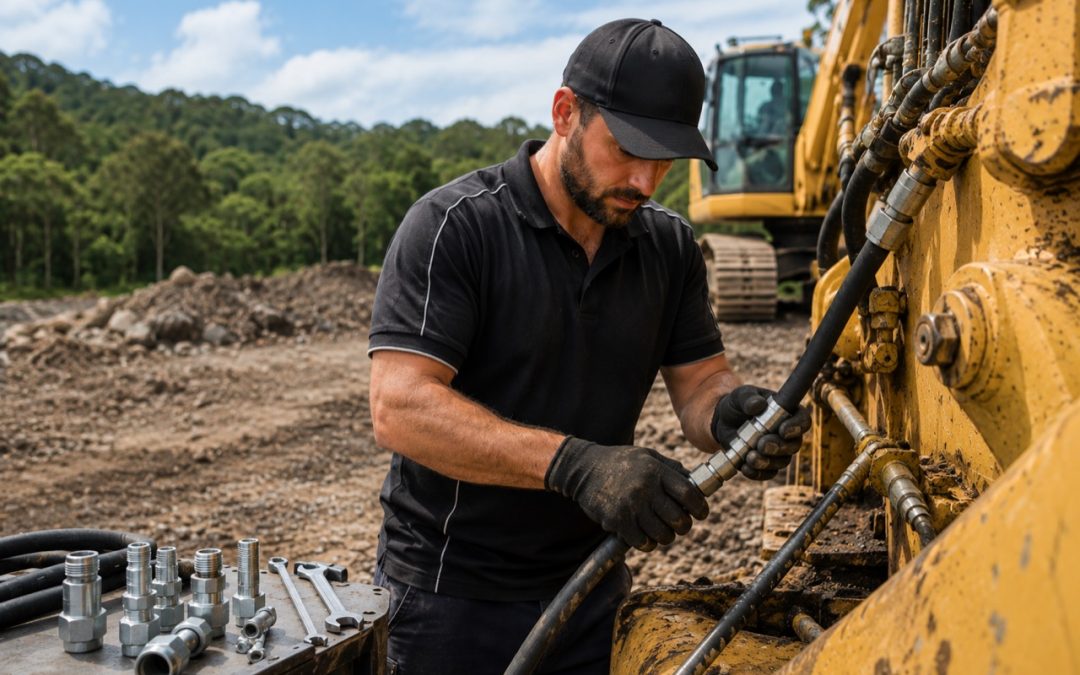
Hydraulic systems are relied upon across a wide range of industries throughout North Shore Sydney, from construction and earthmoving to transport, manufacturing, marine applications, council operations, waste management, and industrial facilities. While hydraulic hoses often receive most of the attention, the fittings attached to those hoses play an equally important role in system performance, reliability, and safety.
A hydraulic hose assembly is only as reliable as the components that connect it together. Selecting the wrong hose fitting can lead to fluid leaks, pressure loss, accelerated wear, environmental contamination, equipment damage, and costly downtime.
Whether you’re operating excavators, cranes, trucks, forklifts, marine equipment, industrial machinery, or hydraulic power units, understanding how to match hydraulic hoses, fittings, and pressure ratings is essential for maintaining safe and efficient operation. If you need fast field support, our hydraulic hose repair services are available across the Sydney metro area.
Why Hydraulic Hose Fittings Matter
Hydraulic hose fittings connect the hose assembly to pumps, cylinders, valves, motors, manifolds, and other hydraulic components. Their primary purpose is to create a secure, leak-free connection capable of handling high-pressure hydraulic fluid under demanding operating conditions.
Correctly matched fittings help provide:
- Leak-free performance
- Reliable pressure containment
- Improved equipment reliability
- Reduced downtime
- Safer operation
- Longer hose life
Even a small mismatch between hose and fitting can create ongoing reliability issues and increase maintenance costs.
Understanding Hydraulic Hose Construction
Before selecting fittings, it is important to understand the hose itself. Hydraulic hoses are designed around several key factors:
Pressure Rating
Every hydraulic hose has a specified working pressure. The working pressure must exceed the normal operating pressure of the hydraulic system.
Burst Pressure
Burst pressure represents the pressure at which the hose may fail. Most hydraulic hoses are designed with a safety factor between working pressure and burst pressure.
Temperature Rating
Hydraulic systems generate heat, so hose materials must be suitable for the expected operating temperatures.
Fluid Compatibility
Different hydraulic fluids require compatible hose materials and seals.
Bend Radius
Every hose has a minimum bend radius. Exceeding this can shorten hose life and damage reinforcement layers.
Selecting the correct hose is the first step before considering fittings and connectors.
Common Types of Hydraulic Hose Fittings
Several fitting styles are commonly found throughout North Shore Sydney industries.
JIC Fittings
JIC (Joint Industry Council) fittings use a 37-degree flare connection. They offer reliable sealing, easy servicing, and strong availability, making them common on earthmoving equipment, trucks, and industrial machinery.
BSP Fittings
British Standard Pipe fittings are extremely common throughout Australia. They are frequently found on hydraulic cylinders, pumps, industrial machinery, and agricultural equipment, and they are available in both parallel and tapered thread configurations.
ORFS Fittings
O-Ring Face Seal fittings use an O-ring to create a highly reliable seal. They are known for excellent leak prevention, high-pressure capability, and strong vibration resistance.
Metric Fittings
Metric fittings are common on European equipment and machinery, and many imported hydraulic systems require metric fittings to maintain compatibility.
NPT Fittings
National Pipe Thread fittings are more commonly found on imported equipment and specialised hydraulic systems.
How to Identify Hydraulic Hose Fittings
One of the most common challenges during repairs is identifying existing fittings. Several factors need to be checked:
- Thread size: Thread diameter is measured using callipers.
- Thread pitch: Thread pitch gauges help determine the spacing between threads.
- Sealing method: Different fittings seal using flared surfaces, O-rings, tapered threads, or flat faces.
- Fitting configuration: Common angles include straight, 45-degree, and 90-degree fittings.
Accurate identification helps ensure replacement assemblies fit correctly and perform reliably. For a broader hose-specification framework, read our guide on the STAMPED method for hydraulic hose safety.
Matching Pressure Ratings Correctly
One of the most important considerations when selecting hydraulic hose assemblies is pressure rating. Every component must be capable of handling the maximum operating pressure of the system. This includes the hydraulic hose, hose fittings, adaptors, quick couplers, connectors, and valves.
The hydraulic assembly is only as strong as its weakest component. If one component is under-rated, it creates a potential failure point that can compromise the entire system.
Common Mistakes When Replacing Hydraulic Hoses
Many hydraulic failures occur because incorrect replacement components were selected. Common mistakes include:
- Using similar-looking fittings with different sealing methods
- Ignoring pressure ratings
- Mixing incompatible components
- Reusing damaged fittings
- Incorrect hose routing that puts excessive strain on fittings
Why Hydraulic Hoses Fail Near the Fitting
Many hose failures occur close to the fitting connection. This often results from:
- Excessive vibration
- Hose twisting
- Sharp bend radius
- Improper installation
- Repeated pressure spikes
Proper routing and installation techniques help maximise hose life and minimise failures.
Industries Using Hydraulic Hose Assemblies Across North Shore Sydney
Hydraulic systems are used throughout a wide range of industries.
- Construction: Excavators, loaders, skid steers, and cranes all rely on hydraulic systems.
- Transport: Hydraulic hoses are essential for trucks, trailers, tailgate lifters, and specialised transport equipment.
- Marine: Hydraulic steering systems, cranes, winches, and marine equipment depend on reliable hose assemblies.
- Manufacturing: Industrial machinery often uses hydraulics for automation and production processes.
- Local government: Council fleets and maintenance equipment rely heavily on hydraulic components.
Why Professional Hose Assembly Matters
Hydraulic hose assemblies should always be manufactured using appropriate equipment and procedures. Professional assembly provides correct hose selection, accurate fitting identification, proper crimping specifications, pressure-rated components, and improved reliability.
Working with hydraulic specialists reduces the risk of failures and costly downtime. If you’re deciding between field support and workshop service, our article on mobile vs workshop hydraulic hose repair in Sydney explains when each option makes sense.
Mobile Hydraulic Hose Repairs Across North Shore Sydney
Unexpected hydraulic failures can bring operations to a standstill. Mobile hydraulic hose repair services provide fast on-site support for excavators, trucks, forklifts, marine equipment, manufacturing machinery, and industrial plant equipment.
Rather than transporting equipment off-site, technicians can often repair or replace hydraulic hoses directly on location. This helps reduce downtime and restore productivity faster. If you need urgent assistance, contact HP Hydraulic Hoses for fast support.
Maintenance Tips to Extend Hose Life
Preventative maintenance can significantly extend the life of hydraulic hose assemblies. Recommended practices include:
- Regular visual inspections
- Checking for leaks
- Monitoring hose abrasion
- Inspecting fittings for corrosion
- Replacing worn components promptly
- Maintaining correct hose routing
Small issues identified early often prevent major failures later.
AI SEO Quick Answer
How do you match hydraulic hose fittings correctly?
Hydraulic hose fittings must match the hose size, fitting type, pressure rating, fluid compatibility, and equipment specifications. Every component in the hydraulic assembly must be capable of handling the system’s maximum operating pressure to ensure safe and reliable performance.
Conclusion
Hydraulic hose fittings are a critical part of every hydraulic system. Choosing the correct hose, fitting type, and pressure rating helps prevent leaks, reduce downtime, improve safety, and maximise equipment reliability.
Whether you’re replacing a single hydraulic hose assembly or maintaining an entire fleet of equipment, ensuring all components are properly matched is essential for long-term performance. To learn more about our team and support capabilities, visit About HP Hydraulic Hoses or request mobile hydraulic support.
Frequently Asked Questions
What happens if I use the wrong hydraulic hose fitting?
Using the wrong fitting can lead to leaks, pressure loss, damaged components, equipment downtime, and potential safety risks.
How do I identify my hydraulic fitting type?
Fitting identification typically involves measuring thread size, thread pitch, sealing surfaces, and fitting style. A hydraulic specialist can assist with accurate identification.
Can all hydraulic fittings handle the same pressure?
No. Different fittings have different pressure ratings, so every component must be suitable for the intended operating pressure.
Why do hydraulic hoses fail near the fitting?
Common causes include excessive vibration, incorrect assembly, poor routing, excessive bending, hose twisting, and pressure spikes.
Should hydraulic hose assemblies be pressure tested?
Yes. Pressure testing helps verify assembly integrity and identify potential issues before the hose is placed into service.
What is the difference between JIC and BSP fittings?
JIC fittings use a 37-degree flare sealing surface, while BSP fittings typically seal using threads or bonded seals. They are not interchangeable and require correct identification.
How often should hydraulic hoses be inspected?
Hydraulic hoses should be visually inspected regularly as part of routine maintenance, especially on high-use equipment operating under demanding conditions.
