
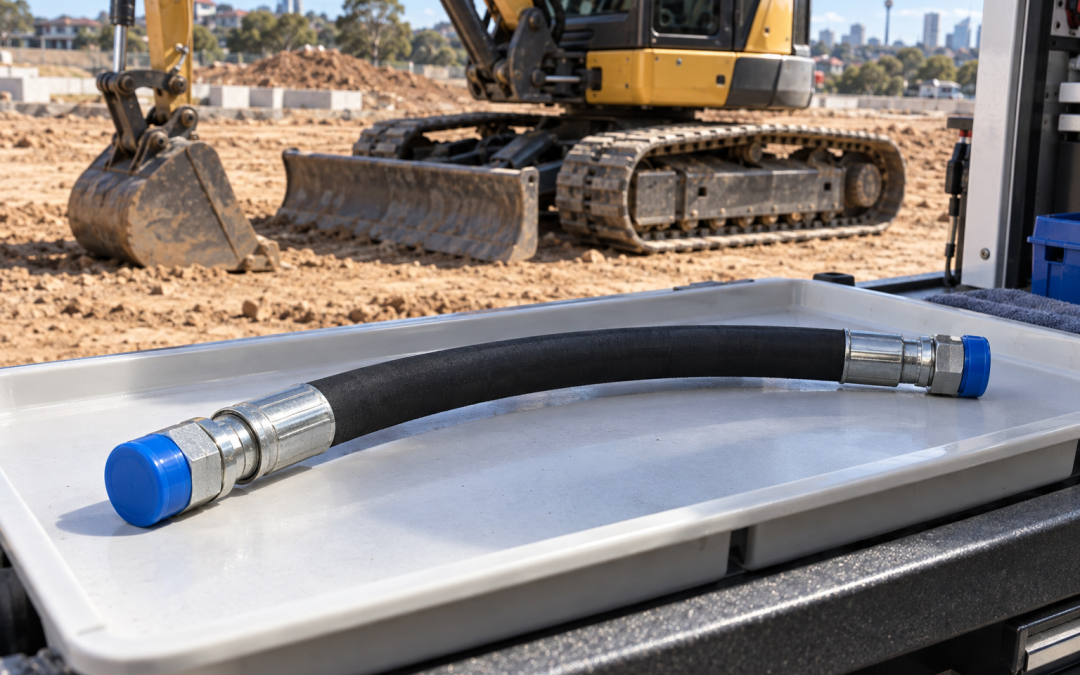
A replacement hydraulic hose can be correctly specified and still introduce problems if contamination enters during preparation, handling or installation. On a busy earthmoving site, dust, grit and dirty work surfaces are part of the environment. Keeping them outside the hydraulic circuit needs to be considered throughout the repair.
HP Hydraulic Hoses provides mobile hydraulic hose repairs across Parramatta and North Shore Sydney. For equipment owners and site supervisors, the useful role is to provide accurate information, arrange suitable access and support a clean work area. Internal cleaning, component removal and system checks belong with competent personnel using the appropriate procedures.
Why a clean assembly matters
Hydraulic fluid travels through hoses and other components as the system operates. Material introduced through an open connection can travel beyond the location of the hose repair. Preventing entry is therefore part of looking after the wider system, rather than simply making the replacement look tidy.
Contamination can come from the worksite, but also from assembly preparation. Hose cutting and fitting processes can generate particles, which is why manufacturers provide specific cleaning methods for completed assemblies. A newly made hose should not be assumed clean solely because it has never been installed.
The required level of cleanliness depends on the equipment and application. Ask the repair provider how the assembly is prepared and protected, and provide any cleanliness requirements stated in the machine documentation. Avoid substituting a visual glance for a procedure intended to control particles inside the hose.
Give the repair team useful site information
When booking, explain where the equipment is located and what work is happening nearby. Dust from traffic, cutting or excavation may affect where a repair can be performed. Access restrictions and the position of the machine can also influence the arrangements.
Tell the technician what failed and whether any connections have already been opened. Mention if a hose end has been left exposed, a component has been removed or the system has lost fluid. Accurate information is more helpful than presenting a partly completed repair without its history.
Provide the machine details and available service records. If the failure followed another component problem, explain that sequence. The technician may need to consider contamination already in the system, not only the cleanliness of the replacement hose being fitted.
Keep preparation separate from general site activity
Allow room for the service vehicle and the technician's equipment in the agreed work area. Avoid stacking materials, sweeping dust or carrying out unrelated work beside parts being prepared. A repair is easier to control when there is a clear space for clean components and a separate place for removed items.
Do not relocate damaged machinery simply to create a more convenient workspace unless the responsible competent person confirms it can be moved safely. Isolation, stored pressure and machine stability must be addressed before the repair begins. Stopping an engine alone does not establish that a hydraulic circuit is safe to open.
For site supervisors, this is mainly a coordination task. Arrange access, identify the responsible contact and keep nearby operations from interfering with the repair. The technician can then determine the appropriate protection and handling methods for the actual conditions.
Protect the hose after it has been prepared
Cleanliness can be lost between assembly and installation. Manufacturers provide capping and packaging systems to protect hose ends during storage and transport. Suitable caps should remain in place until the assembly is ready for the relevant installation step.
Keep new parts off the ground and away from dirty removed components. Do not put uncovered hose ends into pockets, onto a machine track or across an unprotected vehicle tray. Even a short transfer can expose an opening to material that does not belong inside the circuit.
If a cap comes off or the assembly is contaminated, tell the technician. Do not try to resolve it with an improvised cloth, solvent or blast of workshop air. Cleaning methods need to suit the hose, the equipment and the required result; an unsuitable shortcut can add contamination or damage the component.
Look beyond the hose when the failure warrants it
Replacing the visibly damaged assembly may be only one part of the job. The failure history can affect whether the fluid, filters or other parts of the system need assessment. That decision should be based on the equipment and findings, rather than automatically prescribing the same treatment for every hose change.
Ask what was found and whether further work is recommended before the equipment returns to service. If fluid was lost, the correct fluid specification and handling procedure matter. Do not top up from an unlabelled container or assume a product used in another machine is suitable.
Keep any sampling, flushing or additional diagnostics with the people qualified to perform and interpret them. A clean exterior or the absence of a visible leak does not establish that every internal concern has been resolved.
Use the handover to improve the next repair
Before returning the machine to its normal work, confirm that the required installation and operational checks have been completed. Follow the repair provider's advice and the machinery manufacturer's requirements. Do not pressure-test an assembly or search for leaks with your hands.
Record the assembly replaced, the fault reported and any follow-up advice. Include information about contamination found or additional work recommended. If the same location develops another problem, those notes give the next technician a more useful starting point.
For a fleet, make the record accessible to the person booking repairs. A short, consistent entry is easier to use than information scattered across an operator's phone and an invoice. It also helps distinguish a repeat fault from an unrelated problem on a similar machine.
Frequently asked questions
Is a brand new hydraulic hose automatically clean inside
No. Manufacturing and assembly preparation can leave particles that need appropriate cleaning. Ask how the completed assembly is prepared and protected for the intended application, especially when the equipment specifies a cleanliness requirement.
Can I remove protective caps before the technician arrives
Leave the protection in place. Removing it early exposes the assembly without helping the repair. If a cap is damaged or missing, tell the technician so the condition can be assessed before installation.
Does every hose replacement require a full system flush
The required work depends on the failure, the system and the manufacturer's guidance. A technician should assess whether additional cleaning, filtration work or diagnostics are needed. Avoid assuming either that flushing is always necessary or that a hose change always resolves everything.
What can an operator safely do to help
Record the symptoms, provide the machine information and keep people clear of the affected equipment. Follow site isolation procedures through the responsible person. Do not open connections, test pressure or attempt an internal repair without the necessary competence and procedures.
Arrange hydraulic hose repairs in Sydney
Contact HP Hydraulic Hoses for mobile support across Sydney, including Parramatta and the North Shore. Explain the machine fault, site conditions and any work already attempted so the repair can be planned properly. Call 0475 500 000 or contact HP Hydraulic Hoses to discuss your equipment and arrange assistance.
