
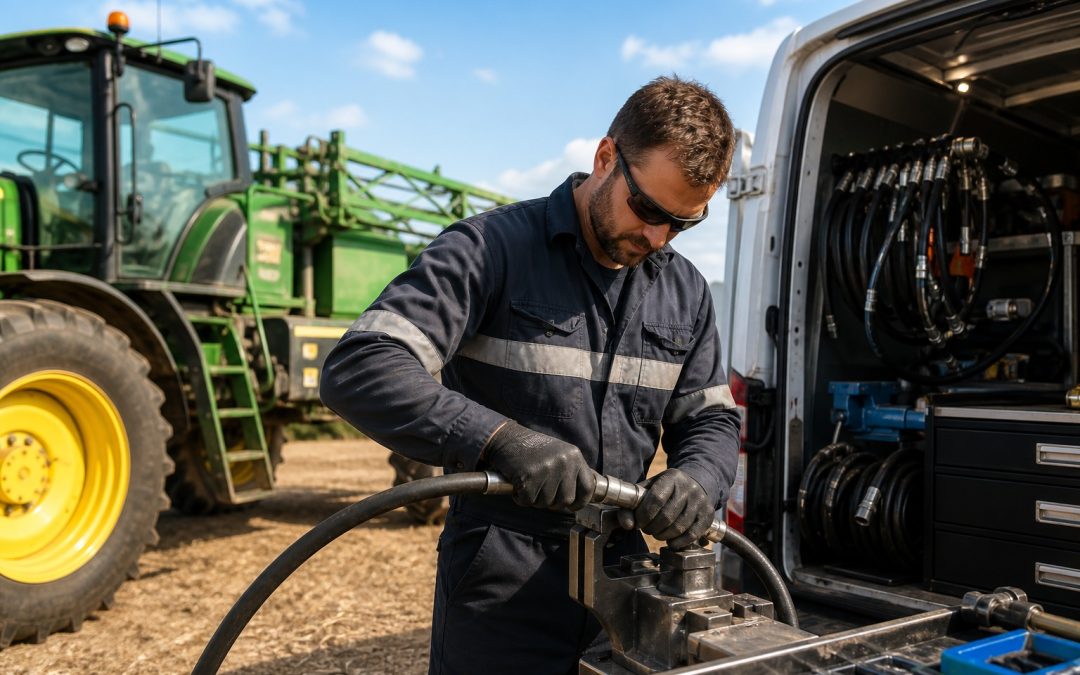
Mobile hydraulic hose repair in Sydney can help operators get support at the machine without unnecessary transport delays. Preparing the site safely, giving the technician useful information and reviewing the cause of the failure can make a call-out more productive and help reduce repeat downtime.
Treat a hose failure as a site safety issue first
A burst or leaking hydraulic hose is not just a maintenance inconvenience. Hydraulic systems can retain dangerous pressure after a machine is shut down, and escaping fluid can cause serious injury, create slip hazards and contaminate the work area. Follow the manufacturer’s procedure for stopping and isolating the equipment and safely securing raised attachments. Keep people clear. Do not test for a leak with your hand, loosen a fitting while pressure may remain, or try to hold a damaged hose together with tape, rags or improvised clamps. Safe isolation comes before a repair can begin.
Understand why one failed hose can disrupt an entire job
When a hose fails on an excavator, truck, loader, manufacturing unit or other hydraulic equipment, the effect can extend beyond the individual machine. Operators may be unable to continue work, deliveries or subcontractors may be delayed, and a scheduled task can become a site-wide disruption. Mobile repair reduces the additional delay of arranging transport to a workshop when the equipment cannot be moved easily. HP Hydraulic Hoses provides mobile hose repair support across the Sydney metropolitan area, including Parramatta and the North Shore, to help industrial equipment be assessed where it is working.
Recognise wear before it becomes an emergency
Routine visual checks can identify warning signs before a hose fails under load. Look for oil residue around fittings, a damaged or worn outer cover, rubbing against a machine component, tight bends, kinks, blistering, corrosion, loose clamps or a hose that appears stretched during movement. The visible cover may be only part of the problem, so do not assume a hose is safe because it has not yet leaked. Pay particular attention to high-movement areas, places exposed to heat or abrasion, and hoses that are difficult to see during a normal walk-around.
Give the repair team useful information before they travel
After the area has been made safe, record the machine make and model, the exact hose location, the site address and the work being carried out when the failure happened. Clear photos from a safe distance can be useful, particularly where the hose route, fittings and surrounding components are visible. Explain whether the failure happened during a specific movement, under a heavy load, after contact with another component or without warning. This information helps a mobile technician prepare for the job and can reduce time spent identifying the application after arrival.
A replacement hose must suit the application, not only the length
A durable replacement requires more than a hose that appears to be the same length. Pressure rating, fitting type, bend radius, hose construction, fluid compatibility, temperature, routing and the movement of the equipment all affect how the hose will perform. HP Hydraulic Hoses offers hose supply and replacement, custom hose assemblies and high-pressure hose servicing for industrial, agricultural, transport and construction equipment. The right repair conversation should consider what the hose is doing on the machine and what may have contributed to the failure, not simply replace the visible damaged section.
Check routing, clamps and protection during the repair
Repeated failures can point to the way the hose is installed. A hose can wear quickly if it rubs on a sharp edge, twists as an attachment moves, is pulled tight at full travel, bends too tightly or lacks appropriate support. Ask the technician to inspect the route and nearby components where practical. A change to the path, clamp position, guarding or fitting orientation may reduce abrasion and improve service life. This is particularly important on machines used in earthmoving, construction, mining, transport and other demanding operating environments.
Know when mobile repair is the practical choice
Mobile hose repair is useful when machinery is immobilised, transport would add delay, the job is on site or the equipment needs an assessment in its actual operating position. It can also be valuable for planned maintenance where several hoses can be inspected or replaced before a shutdown becomes urgent. HP Hydraulic Hoses describes its mobile service as supported by equipped vehicles and offers 24/7 service for emergency repair, maintenance and high-pressure hose work. The best approach depends on the condition of the machine, the safety of the site and whether the repair can be completed safely where the equipment is located.
Contain fluid and protect the work area
Hydraulic oil can create immediate safety and environmental concerns. Once the equipment is isolated and the source is controlled, use appropriate spill-control materials if they are available, protect drains and waterways, and follow the site procedure for collecting and disposing of contaminated material. Do not wash oil into a drain or leave used absorbent material where it can spread contamination. Good containment is part of a professional response because it protects people working nearby and prevents a hose failure from becoming a larger clean-up problem.
Turn every call-out into maintenance information
After the repair, record the machine, hose position, repair date, likely cause and any routing, clamp or guard changes made. Compare nearby hoses that operate under similar conditions, especially if the failure was caused by rubbing, heat or repeated movement. This history gives the next technician useful context and helps the business decide whether a targeted inspection or planned replacement program is justified. Preventative work is easier to schedule than an urgent breakdown, and it can protect productivity when critical equipment is needed most.
Choose a repair partner that explains the next step clearly
The immediate goal is to return the equipment to a safe operating condition, but the best result also explains what should happen next. Ask what failed, what was replaced, whether there are related hoses or fittings to monitor, and what operating or maintenance issue may have contributed. HP Hydraulic Hoses supports automotive, manufacturing, earthmoving and mining applications across Sydney, with mobile repair, hose replacement, pressure testing and diagnostic services. A clear handover helps operators use the repair information to reduce repeat downtime rather than simply waiting for the next failure.
Frequently asked questions
What should I tell a mobile hose repair technician before a call-out?
Provide the machine make and model, site address, failed hose location and what the equipment was doing when the fault appeared. Confirm access restrictions and share photos only when they can be taken safely.
Can every hydraulic hose repair be completed on site?
That depends on safe access, equipment condition and the repair required. Confirm the situation with the technician before assuming that the machine can be repaired where it stands.
How can I reduce the chance of the same hose failing again?
Ask the technician to check routing, clamps, bend radius, abrasion and nearby heat sources. Keep a repair record and follow the equipment manufacturer’s inspection and maintenance instructions.
Arrange mobile hydraulic hose repair in Sydney
For mobile hydraulic hose repair across Sydney, including Parramatta and the North Shore, contact HP Hydraulic Hoses on 0475 500 000. Explain the machine fault and site requirements so the team can discuss a suitable next step.
